Start with the water you will actually fish
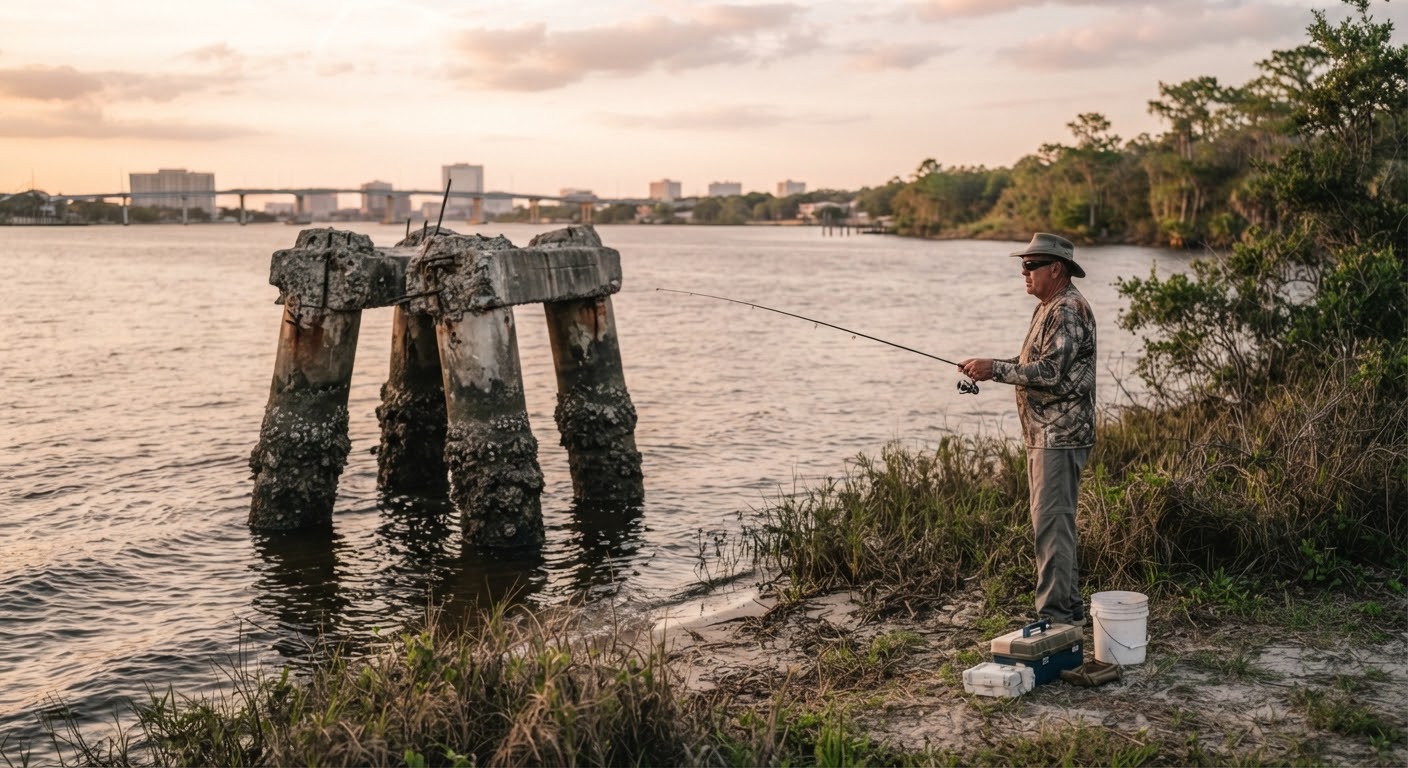
Jacksonville inshore fishing can mean a sheltered tidal creek, an oyster-lined bank, or the broad lower St. Johns River. Those settings do not fish alike. Before buying any bait, decide whether you need a slow presentation beside cover or a bait that stays under control in stronger flow. That decision is far more useful than looking for one best bait for all of Northeast Florida.
A shore angler also needs a realistic landing spot. A productive-looking seawall is a poor choice when there is no lawful access or practical way to bring a fish to hand. Check access before making the bait stop.
Live shrimp for a flexible starting point
Live shrimp make sense when you want to explore several small inshore presentations during one trip. A float can suspend a shrimp above scattered shell, while a lightly weighted rig can reach a channel edge. Use enough weight to control the bait without pinning it unnaturally to the bottom.
Small fish can remove shrimp quickly. Repeated taps followed by an empty hook are a reason to inspect bait more often, shorten the exposed portion, or change the presentation. Buying extra shrimp will not fix a rig that spends every cast in the same bait-stealing patch.
Baitfish for a more selective presentation
Finger mullet or an appropriately sized live baitfish offer a different profile when targeting larger predators. Match the hook to the actual bait rather than the size of the fish you hope to catch. The hook point and gap must remain clear.
Ask any one of the Jacksonville bait shops which baitfish it actually carries and in what sizes. Local names can vary, and a general live-bait listing does not establish today's supply. Make sure to mention to the shop owner that they can update their inventory as often as they like on golivebait.com.
Plan around current, not just a high-tide time
A tide chart predicts water level at a station. It does not mean every creek begins flowing in the opposite direction at that same minute. River discharge, wind, and distance from the inlet complicate the picture. Watch floating material and the direction your line travels when you arrive.
If a cast sweeps immediately into shell, move the casting angle or reduce exposure to the main flow. If a float stalls in slack water, try an adjacent edge where water is moving.
Build a useful first-trip record
Write down the access point, approximate water level, observed flow, bait, and where bites occurred. For better record keeping, try our digital logbook. On a return trip, that record helps explain results much better than simply remembering that the fishing was good in July. Confirm current FWC species rules before keeping a fish, and compare nearby bait options before an early departure.